AB 2050, signed into law by the governor, is a profoundly messy response to the problem of escalating special assessments in older buildings.
Starting in 2032, the law purports to require reserve funding sufficient to prevent the projected association reserve account balance from falling below zero over the next 30 years. Instead, it takes a circuitous route before falling short of its stated intent.
Here’s a summary of what the law says (in boldface), followed by comments:
If reserves are projected to fall below zero at any time in the next 30 years, the association “shall transfer at least 15% of its gross annual budget to its reserve account” each year until the balance rises.
It’s unclear whether the HOA must actually put the money into the separate reserve bank account or just list it as a line item on the budget. It leaves unanswered what happens if hard costs and unexpected expenses make it impossible to fund the budgeted amount.
The 15% reserve contribution is already part of Fannie Mae/Freddie Mac policy observed by many HOAs. This would make it California law, albeit one with no enforcement mechanism.
If that’s insufficient, the HOA must levy a special assessment “subject to the same provisions as a standard special assessment in Section 5605.”
This apparently refers to one or more assessments totaling to no more than 5% of the budget per yearand does not require a membership vote. It’s a small amount, less than one month’s dues, and unlikely to fund reserves in any meaningful way. But it takes away a safety valve for HOA boards that run into other budget overruns.
If “due to the cap on special assessments without a vote” that’s not enough, then the HOA must have a membership vote to approve the larger amount necessary to fund reserves at the minimum level.
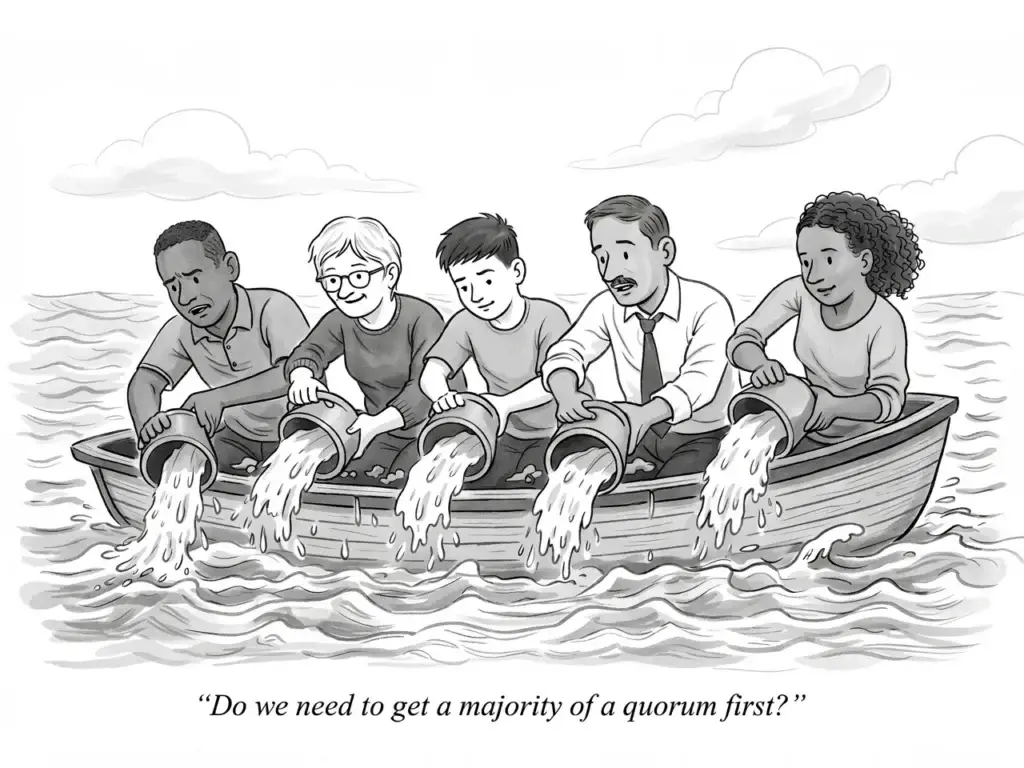
There is no requirement in the law that owners approve the special assessment to fund reserves. So the whole exercise depends, in the end, on whether a majority of a quorum of homeowners are willing to fund reserves.
An HOA can’t levy a reserve funding special assessment more than once every nine years.
The legislation as originally filed says three years. A reserve study must be updated with an on-site inspection every three years. Nine years is an eternity in the lives of boards and owners.
Bottom line
The legislation sets up a complicated formula that takes away a board’s discretion to determine what it should reserve money for and how. It then ultimately leaves the decision of major funding up to the old “majority of a quorum” membership vote.
There are even bigger reasons, however, why this legislation won’t reduce the problem of large special assessments, at least not in the foreseeable future.
What reserve funding can and can’t do
Reserve funding is a planning tool, not an investment strategy. Reserves earn low interest. That interest is taxed at a high rate and can’t even keep up with inflation. Whether money is put into reserves or raised by special assessment, the amount homeowners contribute add up to roughly the same.
If followed precisely, without interruption, over long periods of time, and if the HOA is paying attention to preventative maintenance and repairs or replaces components on schedule, reserves can even out expenses and make them predictable, thereby avoiding some special assessments.
But those are big ifs. History shows that most associations don’t keep up. Once the chain is broken, HOAs must collect large amounts of cash contributions if they try to get back on track.
The problem of deferred maintenance
Deferred maintenance is a repair that’s already past its due date. It may already be causing significant damage. It has to get fixed now, to prevent even bigger, more expensive repairs.
For buildings with low reserves and immediate repair issues, they are already in negative territory.
When the cost to correct deferred maintenance is figured into baseline reserve funding, big special assessments, or large increases in regular assessments (dues), are required just to bring reserve accounting up to zero. This legislation doesn’t address that.
Housing stock in crisis
In hearings and in written support for her bill, Assemblymember Jessica Caloza cited concern for the high special assessments facing homeowners as the impetus behind AB 2050:
The news is rife with stories of HOAs that have put off important maintenance in aging CIDs only to end up with a major, unavoidable cost and no good way to pay for it outside of a large, unexpected assessment upon their members.
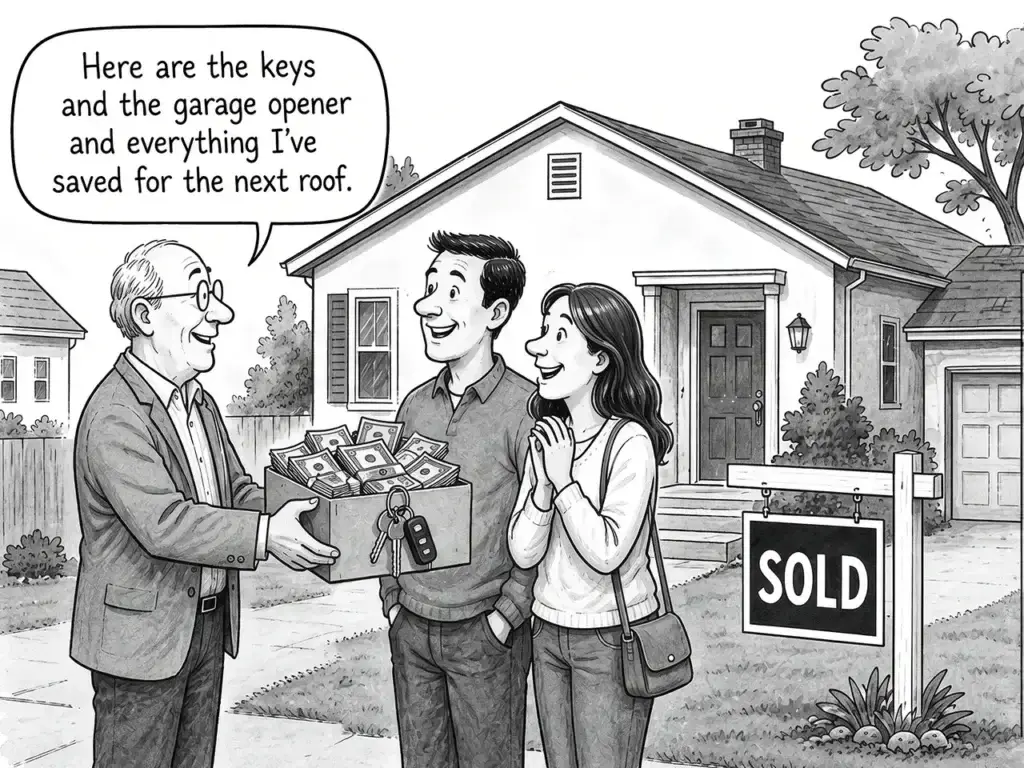
The most recent, well-publicized story is of San Clemente condo owners hit with a $26,000 emergency special assessmentfor roof replacement.
What the stories gloss over is the way California’s Davis-Stirling Act operates.
California’s outlier voting requirement
In most states, HOA boards can pass a special assessment for a necessary repair, such as the roof, without seeking unit owner approval. California is one of only two states that requires an affirmative homeowner vote for special assessments for repairs—a requirement that suggests to homeowners that funding is optional.
An exception to §5605 allows a board to approve an emergency assessment without a unit owner vote. However, that statute provides that anything that’s foreseeable is not an emergency, unless it’s a danger to health and safety. A bad roof is foreseeable and not an emergency, unless it gets so bad that it’s actively dangerous, in which case it will need more costly repairs.
That appears to be what happened in San Clemente. Whether the issue qualifies as an emergency or whether it should have been put to a unit owner vote is an issue to be debated. But everybody seems to agree the roofs leak.
AB 2050 puts us back in this exact same place. Whether it’s a special assessment to make the repair, or to fund the reserves, it requires a majority of a quorum to approve it, unless it’s an emergency.
A fundamental issue of fairness
California has an aging condominium problem and an underfunding problem, as generations of homeowners did the bare minimum.
Deferred maintenance must be fixed. That’s expensive. The question is whether also requireing adherence to 30-year reserve funding plans makes sense for buildings that are 40 or 50 years old.
Owners who purchased under one set of rules—that reserve funding is recommended but not required—and who inherited deferred maintenance and flat reserves are now being required to reserve for future repairs, undermining the value of their investment and their ability to pay.
Final thoughts
As noted, this statute doesn’t take effect for another five years, so maybe there’s time to propose an alternative path.
An alternative approach such as CondoWonk’s proposed Vintage Condominium Act would shift away from long-term reserve funding and focus instead on immediate needs. Deferred maintenance and five-year projections of essential repairs would be disclosed to buyers, and HOAs would be incentivized to make repairs. The cost of deferred maintenance would be paid to the HOA upon a unit sale, and HOAs could special assess for repairs on the five-year list without a member vote.
Community Associations Institute (CAI) was a staunch supporter of AB 2050. It derives much of its income from certification of reserve study analysts.