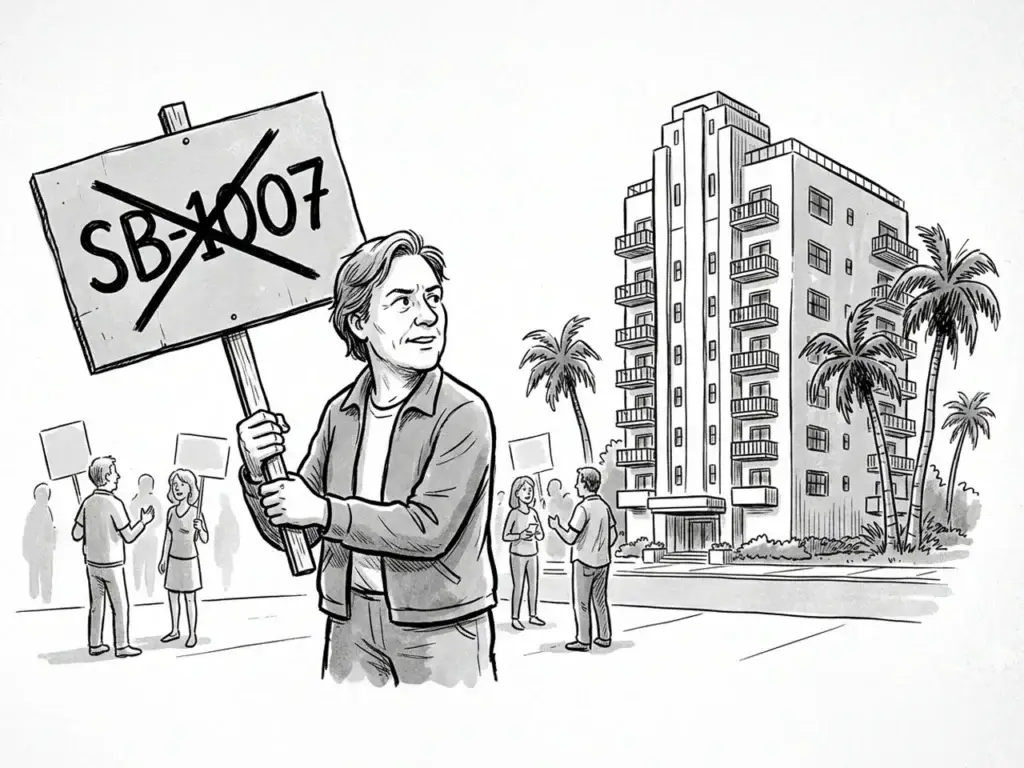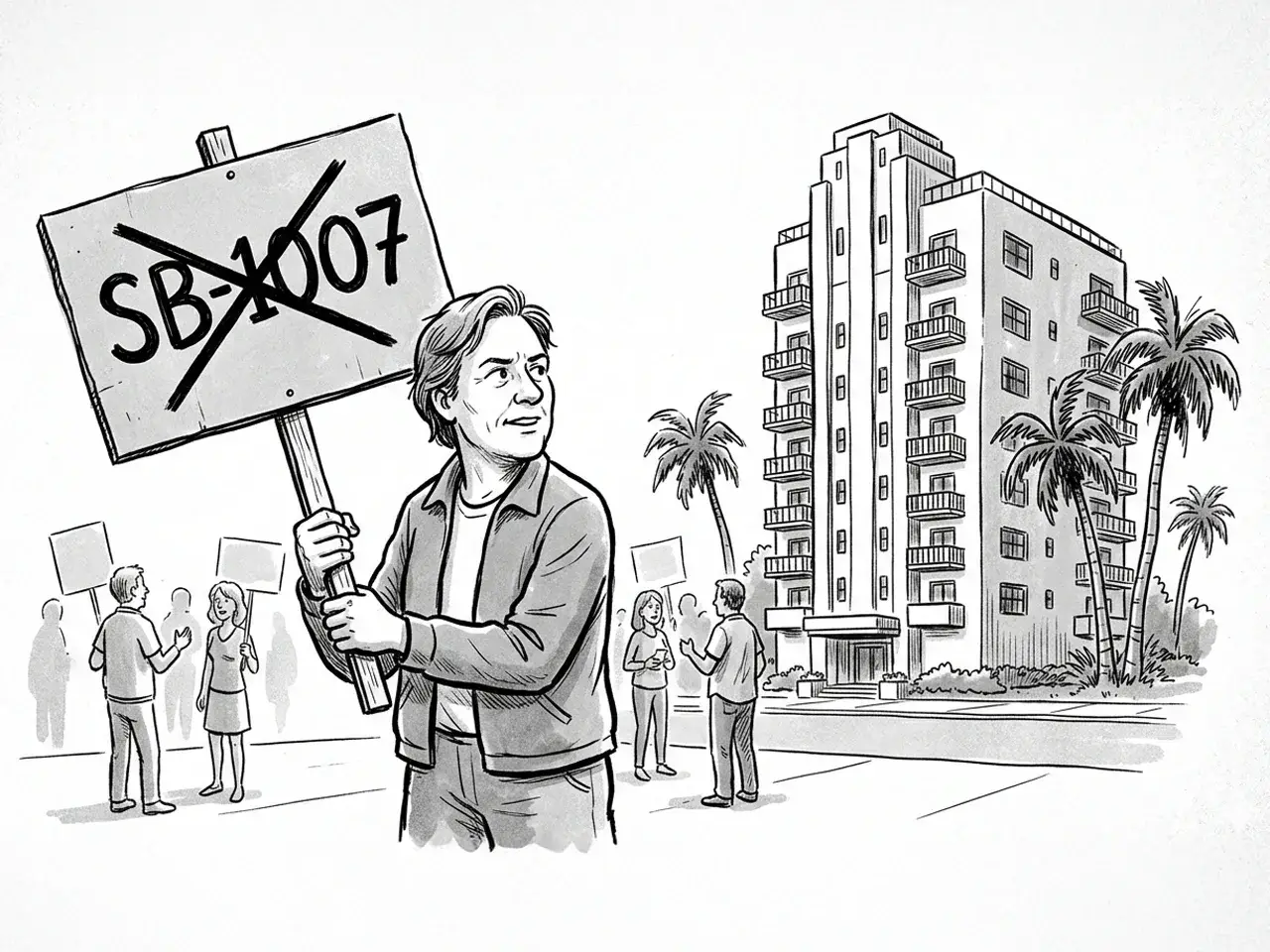
SB-1007, a bill to amend the Davis-Stirling Act now being debated in Sacramento, is promoted, disingenuously, as a consumer protection law.
As of this writing, it has passed the Senate and is on its way to the Assembly. As amended by the Senate, SB-1007 would require an affirmative vote of a majority of a quorum of homeowners for any budget increased more than 8% over the prior year. Under current law, the limit that triggers a vote is 20%.
Maybe that doesn’t sound so terrible, but it is.
That’s not the way condominiums work
Boards aren’t allowed to start with a predetermined budget number and figure out which of their necessary costs they can afford to pay.
Under the Davis-Stirling Act, boards are required to establish a budget that covers actual costs and assess accordingly.
This bill not only undermines the board’s duty under the statute to pass a responsible budget, it suggests to homeowners that increases are optional. That they are entitled to predictable fees.
It doesn’t matter if the insurance policy just doubled in cost, or the previous board members left the newly elected board to face deferred maintenance needs, or that Fannie Mae just raised reserve requirements from 10% of the budget to 15%. Apathetic homeowners could kill even a modest dues increase simply by not returning the ballot.
Where this bill came from
SB-1007 is authored by State Senator Caroline Menjivar. The Center for California Homeowner Association Law and the Consumer Federation of California are listed as sponsors. CCHAL’s stated goal is to “expand and protect the rights of homeowners living in California associations.”
You might remember them. They were behind last year’s provision, added into the much bigger bill AB 130, which caps HOA fines at $100 per violation.
Senator Menjivar made the following statement in support:
During a time when Californians are gripped by dual threats, an unprecedented housing shortage and a crippling affordability crisis, many find their homeownership dreams destabilized by the volatile and sometimes arbitrary escalation of homeowner association fees. Nearly 14 million Californians live in HOAs. Protecting homeowners’ financial stability requires more HOA oversight, including rules for transparency, financial accountability, and due process, keeping these monthly costs reasonable and predictable for homeowners who are on a tight budget.
David Swedelson, Esq, in his excellent blog post, said about SB-1007, “This is not a narrowly tailored bill aimed at the rare bad actor. It is a wholesale structural constraint on every HOA in California, regardless of how well or how responsibly managed.”
Condo associations get hit particularly hard
The Davis-Stirling Act covers both condo associations and other HOAs.
Maybe master planned communities can cut back on the landscaping or other supposedly “arbitrary” costs cited by Senator Menjivar. Maybe.
But condo associations are taking care of the roof over owners’ heads. Many condos are already underfunded, the result of years of deferred maintenance. Neglecting these buildings—by not allowing their boards to perform needed maintenance—threatens people’s homes and their investments.
Anyone who owns an older home knows that costs are not always reasonable or predictable.
Condo buildings are the same. Budgets are based on actual numbers and best estimates and, despite Senator Menjivar’s statement, are not arbitrary.
Buildings cost what they cost.
Here’s a compromise solution
A slight tweak can give homeowners power to stop budgets that are genuinely wasteful or otherwise ill-advised without paralyzing the condominium budget process.
It starts with recognizing that this law is an extreme outlier. Most legislators probably don’t know that California is one of only two states in the country that require an affirmative vote for most special assessments and certain increases in regular assessments.
As an alternative approach, many states give unit owners a type of veto power for certain special assessments and budget increases.
For instance, in the Uniform Condominium Act adopted by 14 states, the new budget takes effect unless a majority of all owners vote against the increase. Florida condominium law requires a majority of owners to agree on a substitute budget if they aren’t happy with the board’s proposed version.
All that needs to happen is to change the requirement from an affirmative vote to a veto-type power.
Final Thoughts
This bill is barreling through the legislature. (Follow its progress here.)
Remember in school being taught about how bills become law?
It’s time to put that civic lesson to work and stop this no good, very bad bill from making it through the legislature.
If it can’t be killed, it needs to be amended to adopt a veto-type power rather than requiring an affirmative vote.
Or, at a bare minimum, postpone it for a year to give condos the chance to adjust their budgets to the new Fannie Mae reserve requirements that increase reserves from 10 percent to 15 percent of their budget.
You can find your legislators here.
Write to your Assembly member right now, because that’s where this bill goes next.