
About Doris Sussman Goldstein
Doris Sussman Goldstein, the writer of CondoWonk, is a Florida attorney recognized nationally for her work with Seaside and other New Urban communities. She combines a deep understanding of condominium theory and practice with a journalism background and hands-on experience as president of her own building in Los Angeles. Her writing challenges conventional wisdom and seeks solutions, particularly for the preservation of aging condominiums as an affordable housing public policy issue.

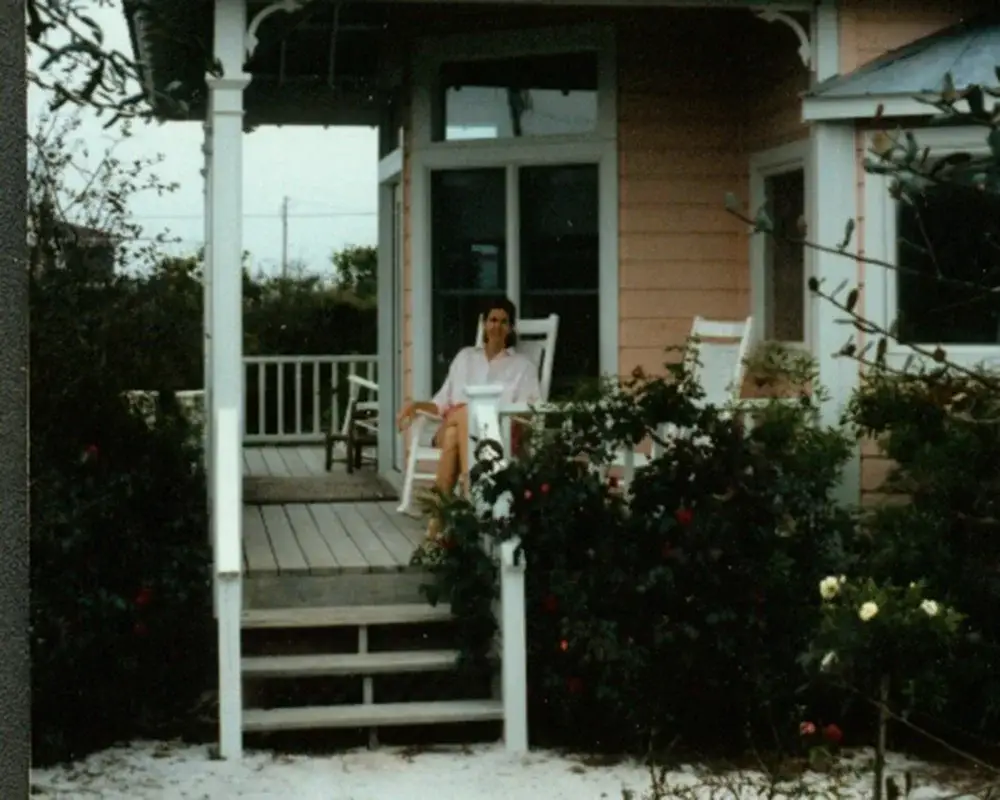 Seaside First Visit
Six questions people ask, answered in her own words.
 Harvard Law School Diploma
Condominiums, especially older condos, are buildings I know and love.
In 1979, when I was accepted to Harvard Law School, my husband and I bought a unit in a brick courtyard building at the height of Boston's condo conversion trend. Erected in 1929, the building was already 50 years old. We were in our 20s and with a little help, we were able to afford it. Two months before graduation, we stopped to take a photo of our newborn in the snowy courtyard.
From my first year of law school, I knew I wanted to be a real estate lawyer, a specialty known by its practitioners as "dirt law." I was captivated as my professor explained common interest development, and I chose a condo topic for my third-year paper.
We moved back to my husband's hometown of Jacksonville, Florida. I started work as an associate in the real estate department of a large law firm, where I drafted condominium and other HOA documents for large master-planned communities.
Looking for a better balance between work and family, I left the firm and started my own solo practice out of my house. It was 1986, way before other attorneys were working at home in sweatpants. In a major stroke of good luck, my first client was Seaside, a new community on the Florida Panhandle that looked like a small town but was operated entirely through private covenants. Recognized for its charm and its pedestrian-friendly, mixed-use design, Seaside became highly successful as the first example of a planning philosophy now known as "New Urbanism."
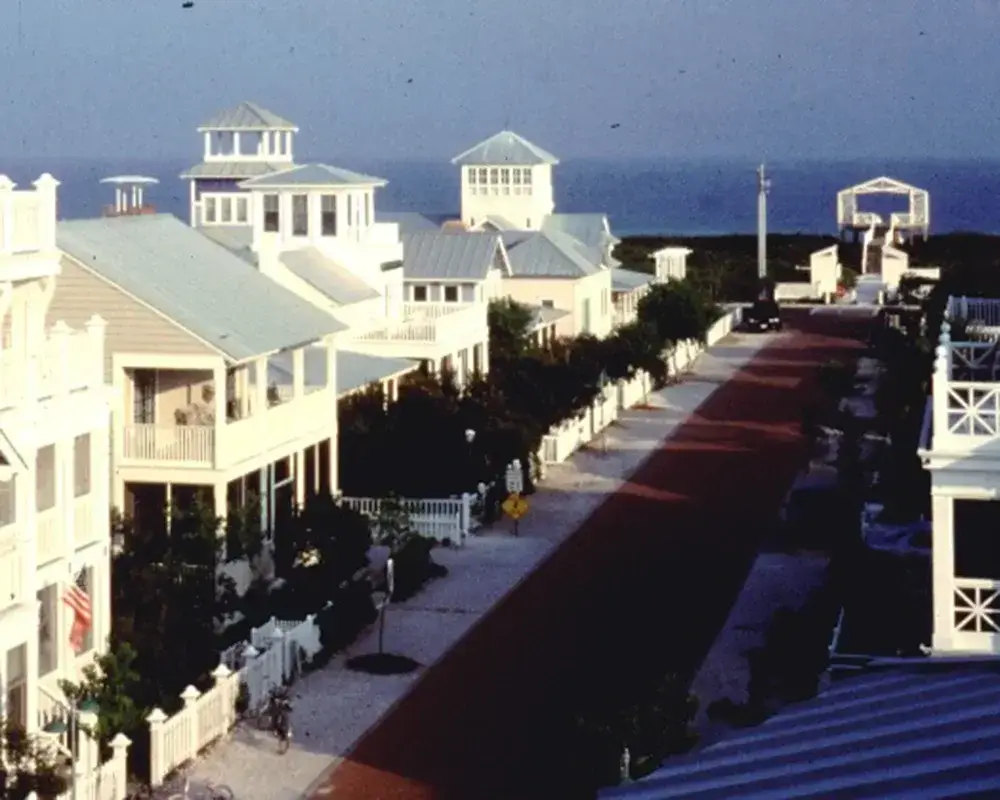 Seaside's most famous street
My representation of Seaside led to other New Urban clients all over the country, where I worked in cooperation with local counsel. It was a brand-new field. I wrote and lectured about legal structures for this innovative type of development. My relationship with Seaside continued, allowing me to see the impact of early decisions and how documents held up in practice.
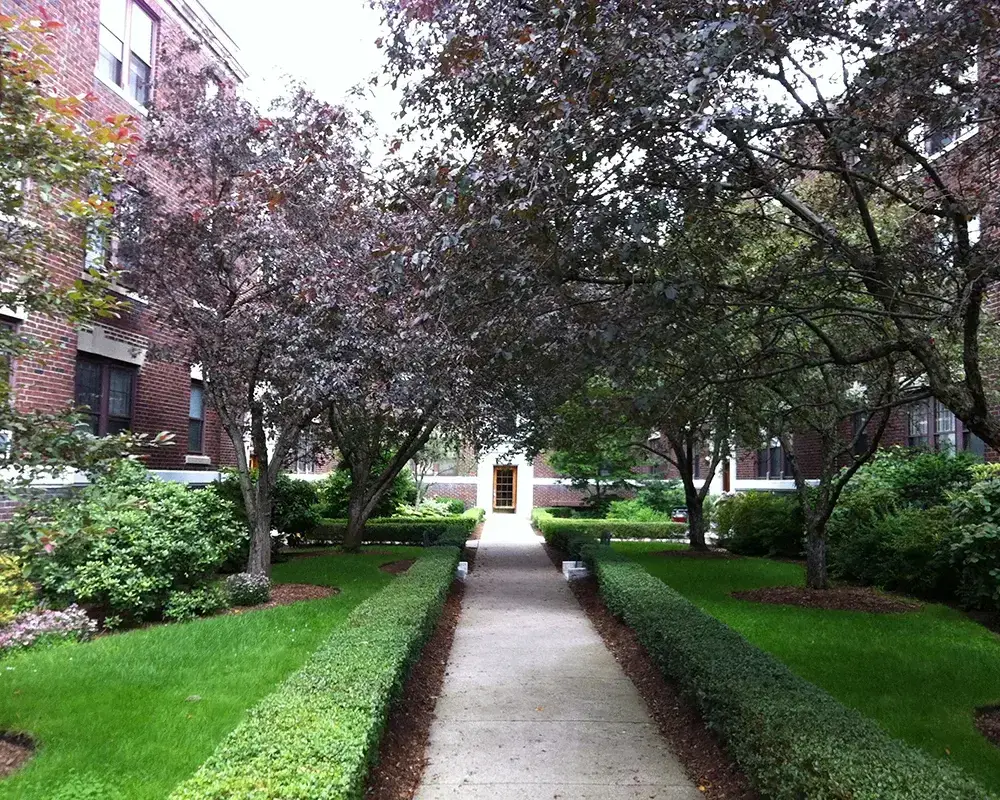 Boston Condo Courtyard
In 2016, my husband and I moved to Los Angeles, close to our grandchildren. I became president of the 26-unit condominium building where we live. Constructed in 1986, it's about the average age of a condo in this country. Like the courtyard building in Boston, it has tall ceilings and large windows and it's in a neighborhood where we can walk to restaurants and almost everything else.
Both buildings represent the aging of America's condominiums from the boom of the 1970s and 80s. Those years saw a mix of new construction like our current building, and condo conversion like the courtyard building in Boston. Most buildings converted to condo ownership were built in the 1960s but some, like the one in Boston, were much older.
I thought my experience writing condo documents had taught me what I needed to know about running one, but being president was frustrating. Again and again, I couldn't find information I needed. Online searches turned up nothing.
CondoWonk was born from my discovery that Los Angeles Department of Water and Power (LADWP) routinely overcharges condos for common area electricity. In our building, electric bills always got much more expensive in the summertime. Tiered rates are designed to discourage homeowners from overusing their air conditioners. Our condo's usage was steady but overall, we always consumed much more electricity than a single-family home. Almost all our usage fell into the top tier, tier three.
I wrote to LADWP and asked, is there any way to change the tier schedule? LADWP told me that condos could use a particular commercial rate, A-1A, that doesn't have tiers. The fact that the rate is applicable to condo common areas is not on the LADWP website, or anywhere else online. You have to know to ask for it.
Before law school, I was a newspaper reporter. I knew how to research and ask questions and write a story. I started CondoWonk to put that information online where other HOAs could find it.
The LADWP electric rate was not the very first story on CondoWonk. While I nailed down the LADWP story, CondoWonk published How To Keep Out Mail Thieves.
On October 6, 2023, CondoWonk ran The Secret Rate That May Lower Your Common Area Electric Bill. Despite several requests, LADWP had failed to comment.
For my follow-up article two years later, LADWP went on the record. It confirmed to CondoWonk that it won't automatically put an HOA in the most favorable LADWP electricity rates. The HOA must ask for it. The utility also confirmed that the LADWP website has no information stating that condo buildings are eligible for the A-1A rate.
By the time of the second article, the rate had been saving our building $5,000 per year, about 20% of its electric bill on an annual basis. Other CondoWonk readers who had followed the advice in the article reported savings as well. LADWP hasn't changed its policy, at least not yet. But if you search for LADWP condo electric rates, CondoWonk is on the first page where others can find it.
Other early stories also focused on practical advice for condominium boards, things I'd learned for my own building. A Less-Mess Method for Organics Recycling. Dealing with Angry Homeowners. And, as discussed further below, how to safely charge electric vehicles in an older building.
CondoWonk will continue publishing stories with useful information for HOAs. But the more I learn, particularly about reserve studies and reserve funding, the more I see problems facing our building as part of much larger public policy issues.
Condominiums represent about nine percent of all housing units in California. As in most states, condos are the most affordable path to home ownership. In a state like California, it's a critical part of the affordable housing stock.
Condos from the boom years of the 1970s and 80s are rapidly aging. The average age of a condo is now about 40 years old or older.
Buildings that are in danger of collapse need to be identified and demolished safely, before lives are lost. But those buildings are rare. Many more condo buildings are undergoing normal aging and are at risk of gradually become uninhabitable as volunteer boards struggle to understand their buildings' needs and raise money from their members.
During the boom years, the concept of reserve funding became widespread. To even out expenses and prepare for the future, condo boards were expected to save money on a schedule extending as far as 30 years into the future. The concept was embraced by trade organizations and became part of statutes. Lenders use the amount of money in a condo's reserve funds to determine mortgage eligibility.
But as buildings aged, reserve funding failed. The theory was flawed. A combination of low interest rates (HOAs have to invest in safe funds) and high taxes on interest for HOA reserve accounts (HOAs pay income tax of 30% on interest) means reserve funds can't even keep up with inflation.
Then it failed in real-world application. HOAs do not have the money they need. HOA boards are blamed for not following the reserve funding plan. Owners complain about special assessments. If more than 70% of the subjects drop out of a massive experiment because the regimen was so difficult to follow and didn't give the promised benefits, would you blame the subjects for the failure?
Now, the insistence on reserve funding is actively harming these buildings by taking away from current repairs. This is a public policy issue on both the state and national level. If aging condos are not maintained, some of them are not going to survive. They may not collapse, but they can become uninhabitable.
It's time for Plan B. We need to pay attention, before the quiet disintegration of these buildings takes away peoples' homes and investments, as well as critical affordable housing.
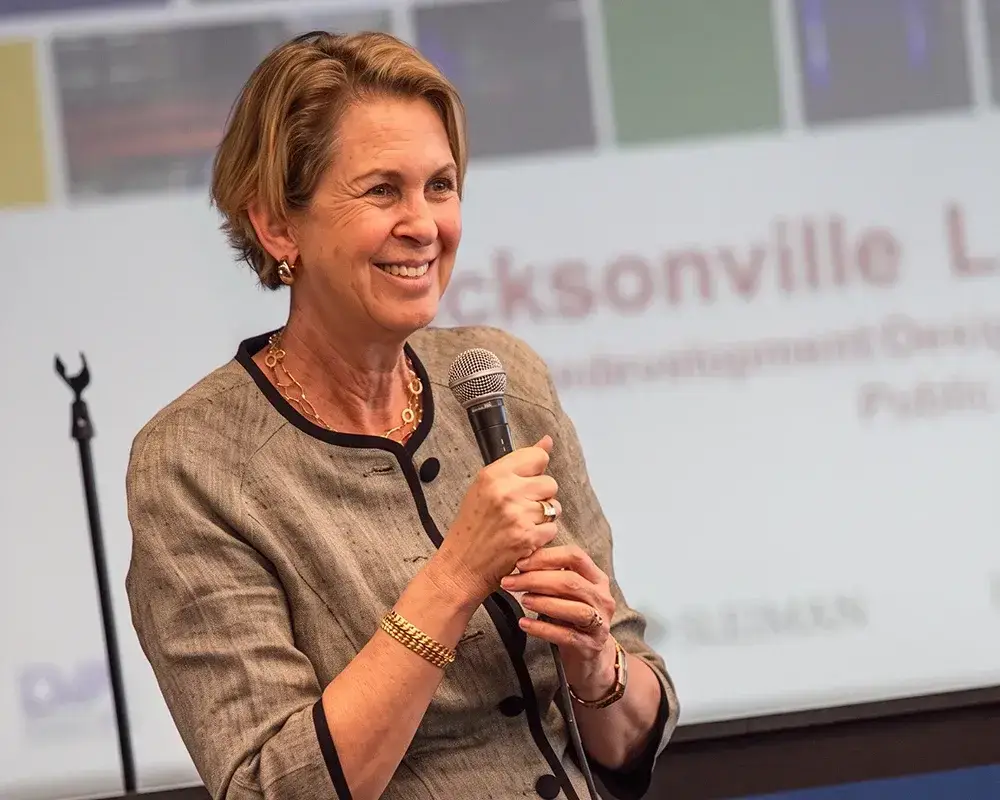 Jacksonville Charrette
Most attorneys spend their careers in a single state. I have experienced, in a way that few have, how different states' laws deal with condominium issues.
As a member of the Florida Bar, I became intimately familiar with condo and HOA laws there. I participated in the Florida Bar Committee on Condominiums and Planned Developments and lectured at Continuing Legal Education seminars. In addition to my Florida practice, I worked in cooperation with local counsel in other states to create New Urban communities.
In the process, I became familiar with condo and HOA statutes in various jurisdictions. I am not licensed in California and have never practiced law in California. But I understand statutes.
Florida and California were pioneers in the development of condominiums. Each developed their own, very different, statutes—the predecessors of the current Davis-Stirling Act in California and Chapter 718 in Florida. Later, national committees wrote model acts that many jurisdictions adopted, making the law in those states similar to each other. Florida and California kept their own idiosyncratic statutes.
On many issues regarding HOA operation, California is an extreme outlier. For example, most other states, including Florida, give boards the ability to pass special assessments for necessary repairs without a vote of unit owners. In most states unit owners may, by majority of all owners, veto the special assessment, but otherwise only a board vote is required.
Only California and Hawaii require an affirmative vote of a majority of a quorum to approve special assessments, even for needed repairs. There's an exception for emergency repairs that were "unforeseeable" but that may not apply even to serious conditions caused by deferred maintenance. This makes it much harder for aging buildings to raise money.
Those who know only California law take it for granted as the way things are done. I don't.
Here are my official credentials:
- Harvard Law School, JD cum laude
- University of Florida, BS Journalism, high honors
- Attorney for the developer of Seaside and other New Urban communities, 1986 to present
- Co-author, A Legal Guide to Urban and Sustainable Development for Architects, Planners and Developers, John Wiley & Sons, 2008
- AV Rated, Martindale-Hubbell
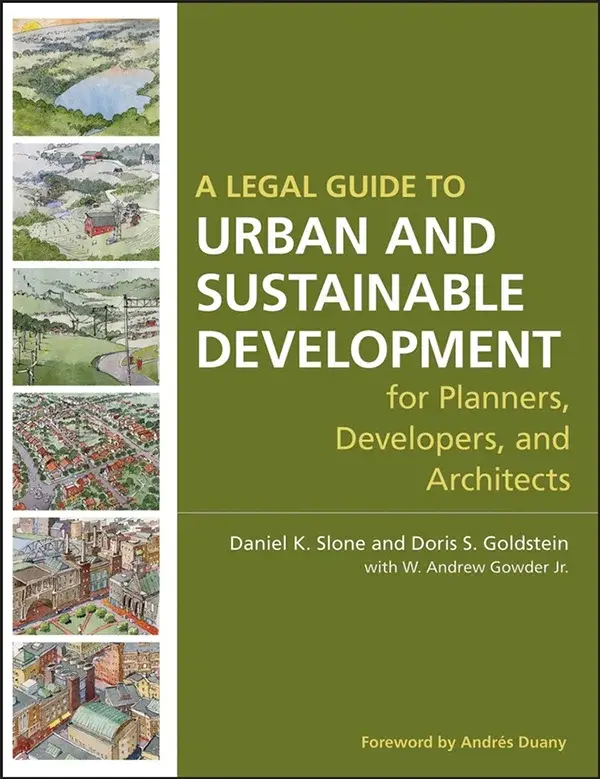
But as a journalist deeply embedded in my subject matter, my most important credential right now is my lived experience as part of my condominium association in Los Angeles.
Most articles are inspired by a problem I've encountered in my building. I check out what's online but I get my best information by talking to real people—asking questions and digging to learn what I need to know. For instance, the CondoWonk story of how to charge electric vehicles in an older building was inspired by a fire in our building's electric room. My internet research confirmed that California HOAs are legally required to allow owners to install chargers, but nothing told me how to do that in a building never intended for plugging in cars.
To find answers, I interviewed five electricians plus the executive director and board chair of Plug-In America. I also spoke to commercial providers of third-party charging systems for multifamily buildings to understand their business model and whether it would work in our building. I talked to the Canada-based manufacturer of the load management device that we ended up using.
After that, I watched the electrician—the one selected from that interview process—install and troubleshoot three chargers in our building and I observed the city's electrical inspector look at what the electrician had done. Then, when the inspector slapped on a gratuitous requirement for a bollard, I researched the citation, talked to his supervisor, followed up with an email and photos and got it reversed.
Other articles have involved digging up an obscure 20-year-old regulatory decision, interviewing insurance brokers and researching statutory requirements and best practices for reserve funding.
I invite differing views and corrections. Minor revisions where I've failed to state something clearly may be made in an article without comment, but substantive corrections and updates will be noted at the bottom of an article. If significant, the change will be discussed in a new, separate article or in the Mailbag page.
What I'm looking for

CondoWonk started out as a way to share information with other condo boards. It was cool stuff I'd learned while trying to help my own HOA. Along the way, I stumbled upon some serious policy issues.
Journalism is a solo occupation. Influencing policy is not. It takes groups of people working together. I'm looking to connect with others who are also concerned, on either the state or national level, about the viability of older condo buildings and the potential loss of crucial affordable housing: