In 1985, when the California legislature enacted the Davis-Stirling Act, the LA Times quoted Assemblyman Gray Davis as saying, “Homeowner associations will finally be able to operate as the businesses they were intended to be.
That choice, to treat them as businesses, over time led to corporate models of asset depreciation and a complex long-term funding strategy.
While obtaining a reserve study every three years is mandatory, the requirement for funding reserves is less clear.
Reserve funding was in many ways a failed experiment, particularly as buildings aged. The combination of low interestand a 30% tax on reserve fund interest kept investments from even keeping up with inflation.
Many HOAs stopped trying somewhere along the way. If they paused, getting back on the wagon was extraordinarily difficult.
Now rigid reserve programs may be doing active harm by taking away funding from currently needed repairs. To save these buildings, maybe we need a different approach.
Maybe condos weren’t meant to be treated as businesses.
Maybe they should be treated like homes instead.
We Already Know How to Do This
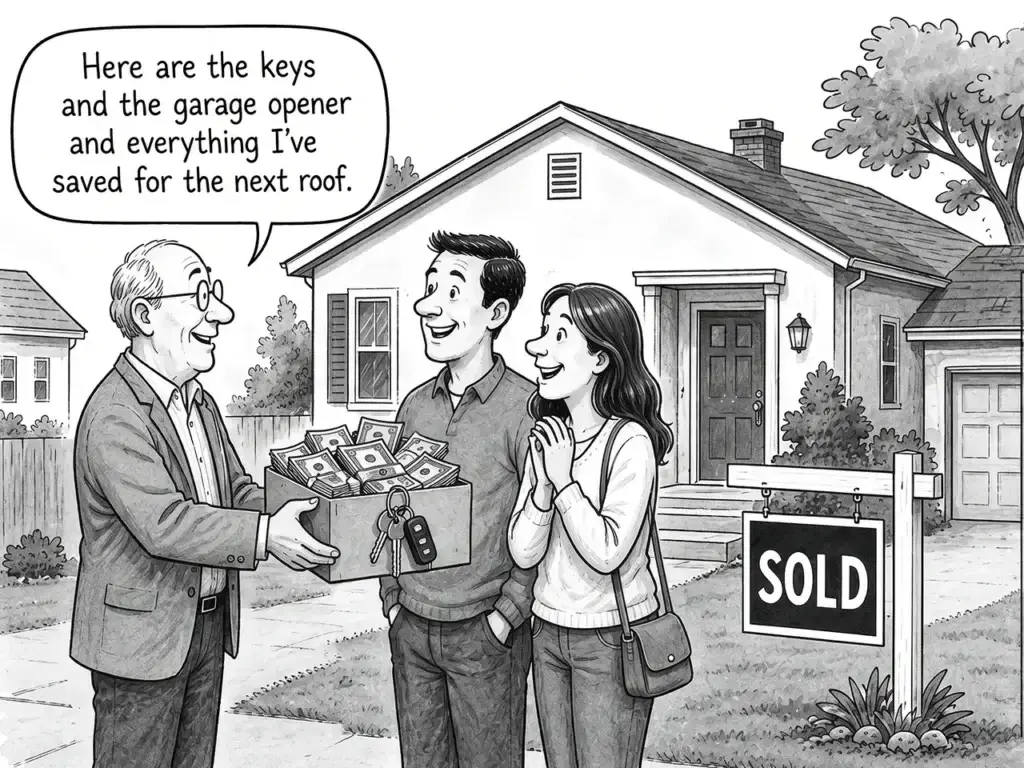
Picture the sale of an average older home—not a distressed property or tear-down.
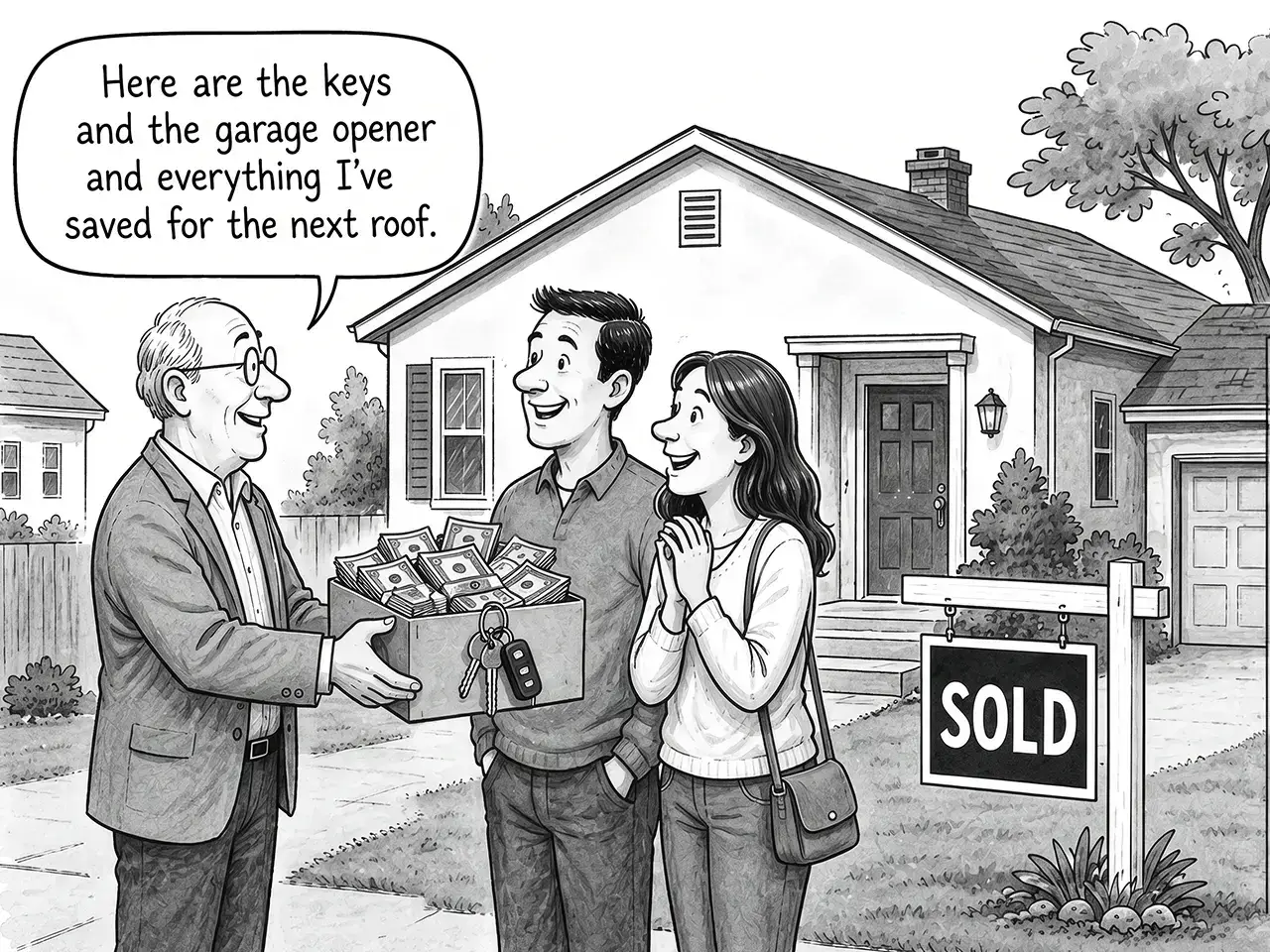
While the house is under contract, inspection finds the roof is bad. Really bad. Under the collective wisdom of residential real estate transactions everywhere, the seller would be expected to repair the roof or discount the sales price to allow the buyer to replace the roof.
Either way, the burden of deferred maintenance is recognized and resolved.
If the inspection instead shows the roof is in decent shape, the closing goes ahead. Years later when it’s time for a new roof, the buyer scrapes up the money (maybe with a home equity line) and replaces the roof.
The Vintage Condominium Act
So here’s a radical idea. Let’s take what everyone knows and understands about residential real estate and translate it into legislation to save aging condos.
The Vintage Condominium Act (VCA), hereby proposed, breaks the cycle of units that pass from one owner to the next without recognizing or correcting deferred maintenance that can undermine the building’s integrity.
It helps HOAs bring repairs up to date and incentivizes them to do so.
It gives buyers a useful tool that quantifies the amount of deferred maintenance and tells them what they are likely to owe for upcoming repairs.
And it allows buyers and lenders to evaluate condo units based on the condition of the building, not just how much is in the reserve account.
Here’s how it works.
Reports With Essential Information
For participating HOAs, the Vintage Condominium Report (VC Report) replaces reserve studies with a much shorter and simpler document directed to the needs of older buildings.
Over time, the list of items typically included in a California reserve study has grown as reserve study analysts compete for thoroughness. The VC Report, which replaces it, focuses on the items essential to building integrity, not gym equipment and lobby décor.
For essential items, the VC Report generates two important numbers:
VC1 identifies the cost of correcting deferred maintenance plus other maintenance coming due in the current year.
VC5 includes all work identified in VC1 plus the next four years.
Each can be expressed as an absolute dollar value for the building and as the proportionate share for each unit.
The inspection, which would be updated at intervals, would suggest projected repairs for a certain time, say 5 to 10 years. Between inspections, the HOA would update VC1 and VC5 numbers annually, deleting items that have been repaired and adding new items from the report.
Catching Up at Closing
VC1 recognizes and quantifies deferred maintenance as a burden on the value of the unit. The unit’s VC1 share must be paid at closing to the HOA, with the source of the payment (but not its total amount) negotiated between buyer and seller.
Paying VC1 to the HOA prevents buyers and sellers from using VC scores to simply discount the sales price, a practice that lowers the market value of all units in the building without helping the HOA make the repairs. And current owners who know that VC1 will be figured into the sales price have less incentive to postpone repairs.
The VC1 payment to the HOA at closing goes into the HOA’s VC fund (an account dedicated to funding repairs identified in the report) and is credited to the unit buyer toward any future special assessments for those repairs.
The remainder of VC5 is not paid at closing. Instead, the report gives buyers a reasonable idea of expected assessments over the next five years. They can use that information to compare units in different buildings and be better prepared for the true cost of ownership.
Helping HOAs Make Repairs
By electing VC status, boards have a streamlined path to funding VC1 repairs and anything else on the VC5 list. Under this proposal, they can approve special assessments, borrow money or increase dues to fund or reserve for any expense disclosed in VC5 without homeowner approval, despite any other provision in the existing statute or CC&Rs to the contrary.
Owners are on notice that VC5 repairs are coming and aren’t taken by surprise. For major repairs, the board could look ahead up to five years and break assessments into payments, giving owners time to plan over a realistic time frame.
This is particularly important in California, one of only two states that require a homeowner vote for most special assessments, even essential repairs.
Emergency repairs are an exception but to qualify, the condition must be hazardous or a threat to public safety, or the repair must not have been reasonably foreseeable when the board was making up its annual budget. As a result, the leaking roof that the board ignored was foreseeable and requires a homeowner vote for a special assessment…unless it becomes so deteriorated that it becomes hazardous.
Not that recognizing the issue sooner would have helped much. Had the board tried to pay for the repair by increasing the budget, any increase of more than 20% would also require an affirmative homeowner vote.
This double whammy is crippling and allows apathetic homeowners to kill even critically necessary assessments. Giving HOAs the power to assess for repairs disclosed on the VC5 list is essential to preventing that downward spiral.
Marketability and financing
As boards fix problems disclosed in the VC report, their VC numbers will improve. Favorable VC reports should provide both buyers and lenders with a tool to evaluate the condition of the building rather than its reserve funds.
To be successful, Fannie Mae and Freddie Mac will need to recognize VC amounts as a useful tool for qualifying a property and allow its use to replace reserve funding requirements. Their participation and input would greatly improve the success of this legislation.
The Benefits of Simplicity
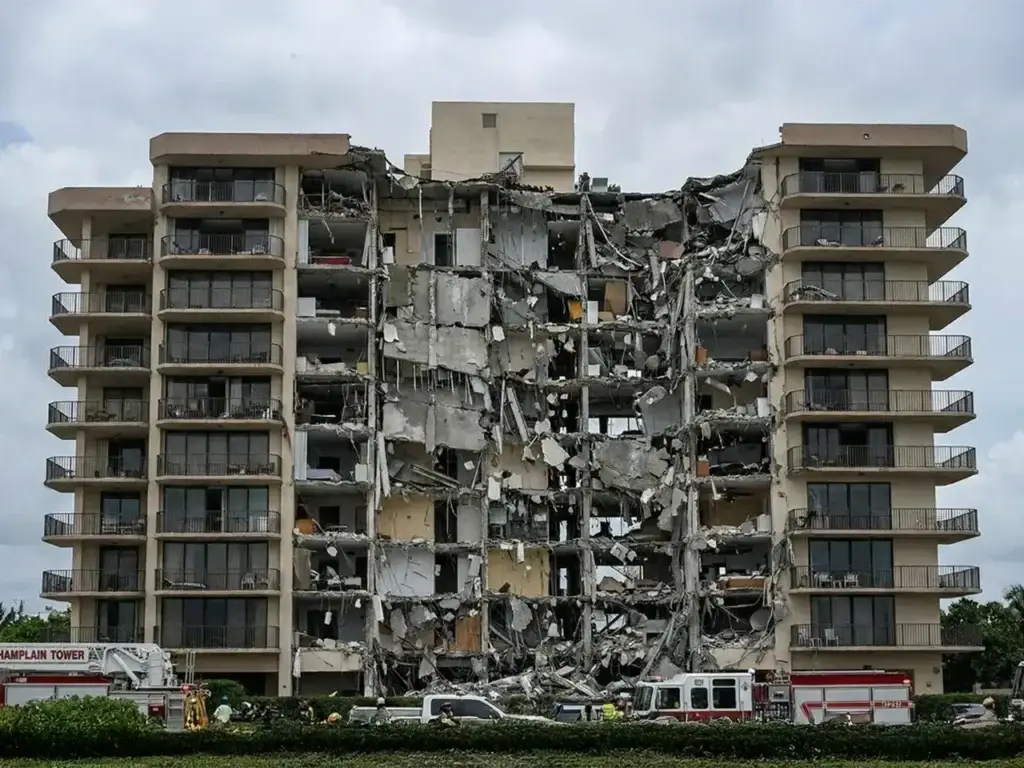
All the incentives in the Vintage Condominium Act work together to help aging condos make necessary repairs—the kind of repairs that get more expensive if ignored and can lead to the loss of crucial housing resources.
Over the years, the Davis-Stirling Act has become overly complicated, with competing provisions. For those HOAs that choose it, the VCA would provide a streamlined alternative to certain provisions of the Davis-Stirling Act.
Such HOAs would no longer be required or expected to follow traditional reserve funding. Instead, the combination of powers and incentives in the VCA Act would shift the focus to identifying and repairing what needs to be fixed in the current timeframe. .
What About Reserves?
Reserve funding was designed at a time when buildings were new. It made sense for owners as they faced predictable repair cycles early on and it probably still makes sense for newer buildings.
For those HOAs that have successfully funded reserves according to a schedule and are spending those reserves to properly maintain the building, then great. Keep doing it. The VCA election is voluntary and doesn’t change anything in the Davis-Stirling Act for those who prefer that route.
Prudent homeowners keep some money in savings. That’s not the same as reserve funding, but it’s good to have.
But for midlife HOAs that have fallen far behind, a reprieve from reserve funding in favor of incentives to remedy deferred maintenance could be a lifeline.
Final Thoughts
This is an outline, not a legislative draft.
For buildings that serve lower income residents, VCA should be paired with grants or interest-free loans to make crucial repairs.
The simplicity and clarity of a VC report may make obvious, in some cases, that a building is beyond repair. For those, there may need to be a logical path forward, a kind of Do Not Resuscitate plan. That’s another topic.
A reminder, I am not licensed to practice law in California. But I am living the issues as president of my own vintage condominium.
Write to CondoWonk with your comments, or find me on LinkedIn, and we’ll see what we come up with.