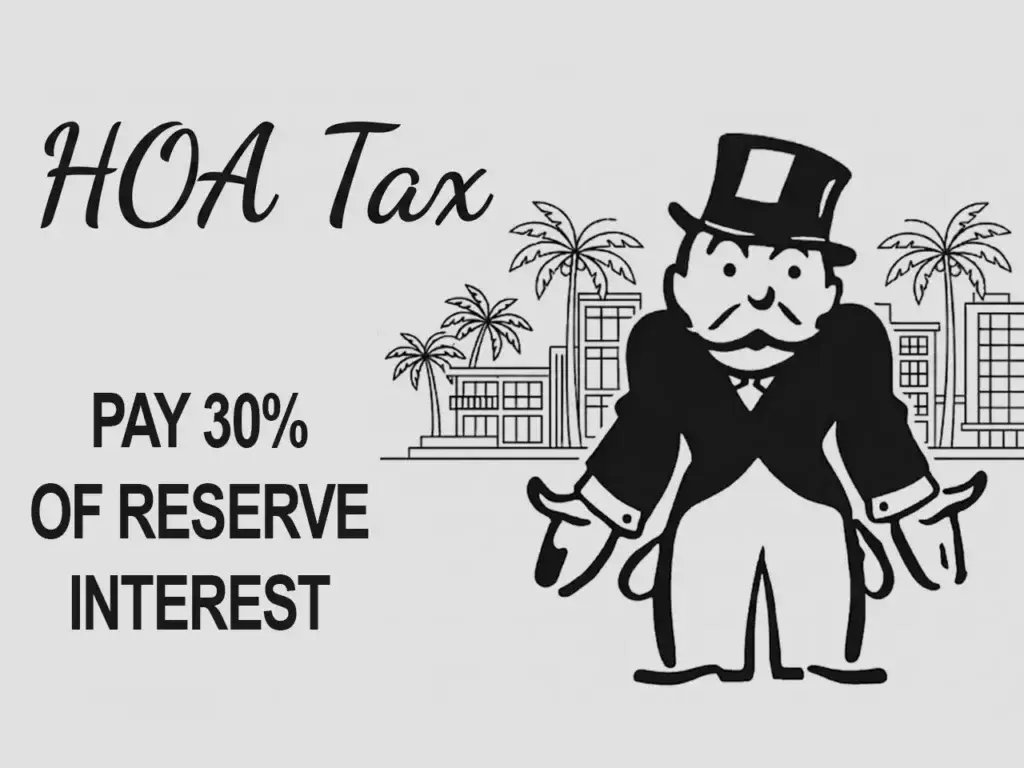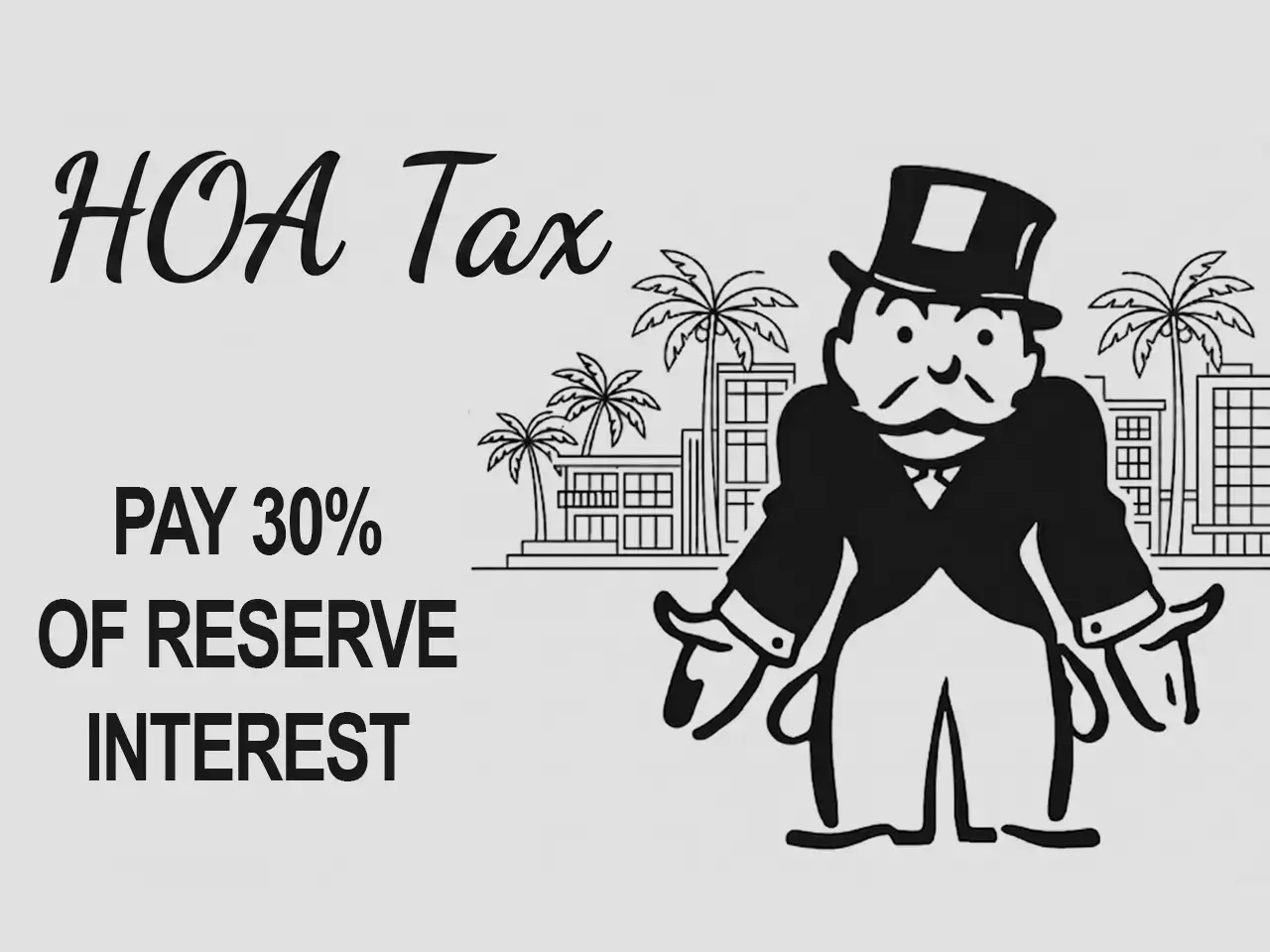
Astonishing but true: homeowner associations (HOAs) pay a federal tax rate of 30% on interest on reserve accounts.
The tax rate—far higher than the average personal income tax or even the rate corporations pay— is an unjustifiable levy on HOA funds that makes it hard for reserves to even keep up with inflation.
Yet it continues with very little attention or discussion. Few people, even those in the industry, are even aware it exists.
Where it comes from
It started with the Tax Reform Act of 1976, an act of Congress meant to benefit HOAs by recognizing them with a special category, Section 528. Under that section, HOAs pay no federal income tax on assessments they receive from their members.
That recognition comes with a stiff price. Under the Act, non-exempt income, including interest on reserve accounts, is taxed at 30%.
Both personal and corporate income tax rates have been reduced significantly since the enactment of the law in 1976. The 30% flat rate on HOAs has not.
Unchanged 50 years later, it applies to all HOAs that use the special HOA short form, 1120-H, for tax filing.
How it works
Most HOAs are organized as nonprofit organizations under state law. (They are not, however, charitable organizations. The amounts owners pay to their HOAs are not tax deductible.)
HOAs need to file annual income tax forms.
Rather than use Section 528, HOAs can elect to file their taxes as regular nonprofit corporations and pay a tax rate of up to 21%. However, the filing is much more complex.
The vast majority of HOAs use the simplified form and pay a tax rate of 30% on reserve fund interest.
How to change it
Here’s the chance to piggyback onto some current federal legislation that’s already focusing on condo issues.
The Making Condos Safer and Affordable Act of 2026 (HR 9569) is a bipartisan federal bill introduced in Congress. Co-sponsored by U.S. Representatives Debbie Wasserman Schultz (FL-25) and María Elvira Salazar (FL-27), it would extend existing HUD and FHA homeowner loan programs to condominiums.
If passed, these programs could be used to finance projects for rehabilitation and repair of the common elements, either directly to the HOAs or through financing of unit owners’ special assessments.
It’s a good bill. It recognizes that condominiums are critically needed housing, and that condo owners are homeowners.
Congress is in the mood to fix housing issues. Witness the bipartisan success of the 21st Century ROAD to Housing Act which became law without the President’s signature in July.
Now condominiums are getting some attention from Congress.
It would only take a few lines to amend HR 9569 to get rid of the 30% federal tax rate on interest on HOA reserve funds.
Final Thoughts
What should the tax rate be? Not 30 percent. Not the regular corporate tax rate of 21%.
Either is much higher than the personal rate for most homeowners.
The fairest solution would recognize that the HOA holds these savings on behalf of the homeowners. Rather than pay taxes on its reserve fund interest, the HOA could notify each homeowner as to their proportionate share of the interest income and the homeowner could report it on their own tax forms.
Just an idea. Maybe there’s a significant deduction on which the HOA owes no taxes, or minimal taxes. More complex formulas would apply only to larger funds.
Congress can work out the details.
Until the tax rate is fixed, though, reserve funds are broken.