When HOAs have flat reserves or their dues are too low, California’s Davis-Stirling Act is unforgiving. A punitive law–an extreme outlier among states–makes it harder than it should be for new boards to catch up when they inherit a mess.
By Doris Goldstein
Congratulations! You’ve just been elected HOA president.
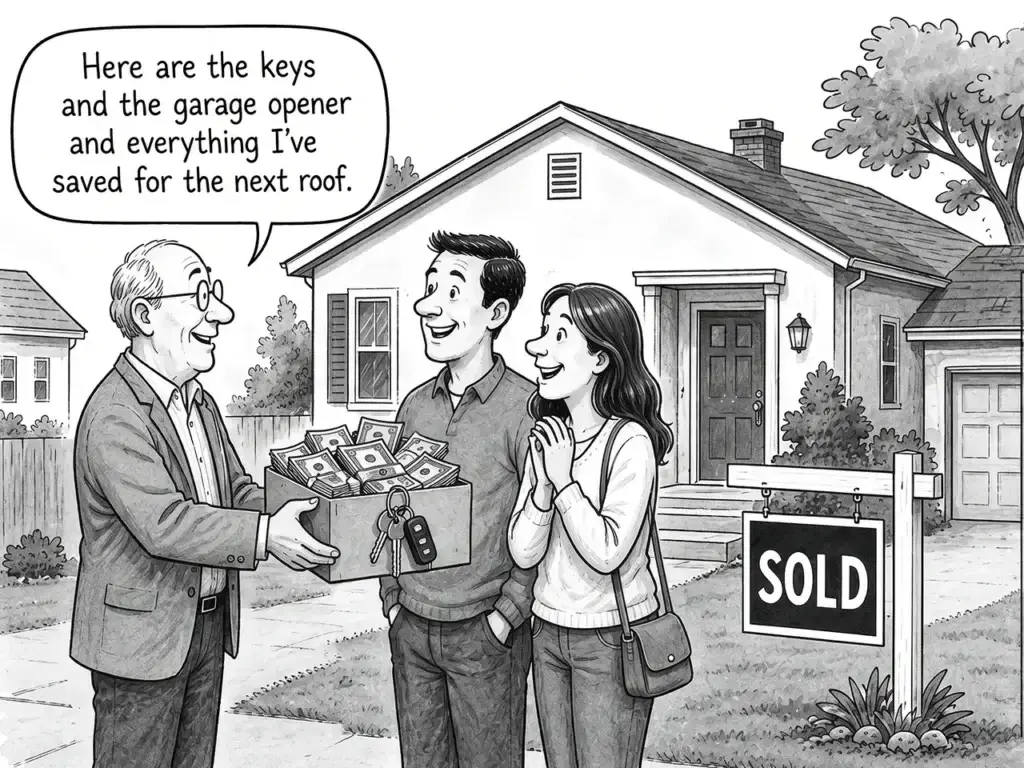
Except the prior board and a disastrous management company left you with flat reserves, dues that are way too low and a leaky roof. What now?
You need to raise dues enough to cover expenses and you need a special assessment to fix the roof. Unfortunately, the Davis-Stirling Act, the law governing all condominiums in California, puts a big obstacle in the way.
California is one of only two states in the country with this kind of requirement. Other states don’t make it this hard.
Here’s how it works.
Assessments under Davis-Stirling
Assessments—both regular assessments (dues) and special assessments—are governed by Civil Code 5605 of the Davis-Stirling Act. It doesn’t matter what it says in your CC&Rs. This is one of those times where the Davis-Stirling Act takes over.
If the HOA has been chronically underfunded, or the HOA has been hit by a major, unpredictable expense, a significant increase in regular assessments (dues) might be necessary. An increase of more than 20% requires a secret ballot vote of the membership. After following detailed provisions for notice and other requirements, a quorum of the membership (more than 50%) must cast ballots, and of those ballots, a majority must vote in favor for the higher assessment for it to pass.
That’s for dues. For most associations, the effect on special assessments is an even bigger problem.
Under that same statute, Civil Code 5605, most special assessments approved by the elected board need to be approved in the same way. Like for dues, a quorum of the membership must cast ballots, and in order for the special assessment to pass, a majority of the votes cast must say yes.
That means a majority of all owners have to bother to turn in their ballots, and a majority of those voting have to approve the special assessment.
This is a tremendous hurdle for associations trying to fix roofs, repair siding, and make other repairs. Neglecting them further threatens the structural integrity of the building and only makes the ultimate repair more costly.
There are only two exceptions that allow the Board to approve a special assessment without a membership vote.
Exception #1: The Five Percent Rule
The Board may annually approve a special assessment equal to not more than 5% of the HOA’s current budgeted expenses, to be divided up among the units.
This can be one annual assessment, or several smaller special assessments, so long as they do not add up to more than 5% in any single year. The special assessment does not need to be for any specific purpose and can be used to cover budgetary shortfalls.
But it doesn’t raise much money. It is, in essence, a 5% surcharge on dues.
Exception #2: Emergencies…with limitations
The Board can approve a special assessment of any amount in an emergency, but meeting the definition can be tough.
As defined in Civil Code 5610, only four types of emergencies qualify:
- An extraordinary expense required by a court order,
- a threat to personal health or safety or other hazardous conditions,
- certain utility repairs, or
- An extraordinary expense to repair or maintain the condominium, but only if the expense “could not have been reasonably foreseen by the board in preparing and distributing the annual budget…”
The issue of foreseeability is a critical limitation
To approve an emergency special assessment for building repair or maintenance, the statute requires the board to pass a resolution containing written findings as to “why the expense was not or could not have been reasonably foreseen in the budgeting process.”
Lawyers have opined that emergency special assessments can be used to pay for insurance premiums that suddenly skyrocket in the middle of a budget year. However, it’s generally understood that the following year, when the increase is now foreseeable, the increase must be included in the budget rather than paid by an emergency special assessment.
A leaky roof that needs replacement rarely passes the foreseeability test. Any board should have seen it coming.
The fact that the old board wasn’t paying attention, or didn’t care, doesn’t change how the law applies when new members are elected to the board.
The new board members inherit the mess. The percentage limits on increases make it impossible for the board to catch up when dues are too low and reserves that are underfunded.
One board’s experience
A homeowner who helped stage a recall election in a severely underfunded HOA described how the new board is trying to unravel the budgetary mess.
As part of that process, board members are reviewing proposals for inspectors of election, who will then distribute ballots for membership approval of a dues increase of approximately 60%, plus special assessments for immediate repairs
“Without this increase, our HOA’s ability to pursue costly repairs and replacements is absolutely stalled,” she said. “This process takes entirely too long and the longer we delay, the higher the risk of encountering costly emergency repairs as we head towards another winter season.”
California is an extreme outlier
Hawaii is the only other state that requires an affirmative vote of the membership for special assessments to make necessary repairs. Hawaii’s law, which appears to be based on California law, applies only if the special assessment is greater than 20% of the budget. California’s law starts at 5% over budget.
A few states (Illinois, Connecticut and Washington) put special assessments to a homeowner vote but use rejection-based systems, in which the board’s action is ratified unless unit owners act to vote it down. It appears that all remaining states either have no restrictions, or have veto procedures that put the burden on homeowners to organize a meeting and get a majority of a quorum, or a majority of all homeowners, to vote against an assessment.
CC&Rs–the recorded documents establishing a particular condominium–may grant wide powers for boards to impose special assessments or conversely, create their own restrictions.
But in overriding CC&Rs with a blanket requirement for affirmative owner approval for special assessments of amounts starting at 5% over budget, California stands alone.
What’s needed, right now
The California law needs to be amended to allow condominium boards to pass special assessments, without homeowner approval, if the assessment is needed for the integrity of the building or the operation of any of its systems.
It’s just a handful of words in an existing statute. And since the statute already takes precedence over what’s in the CC&Rs, the impact will be immediate.
What about homeowner rights?
Boards have an obligation, by California law, to collect enough money to maintain the common elements. People who buy into condominiums have a responsibility to the board, and their fellow unit owners, to allow them to perform that duty.
Reasonable guardrails are possible.
In many of the 48 states that don’t require an affirmative vote to pass a special assessment, homeowners have a type of veto power. Under their state laws, they may organize in opposition and vote against a special assessment that they believe is unreasonable. That’s different from California’s law requiring an affirmative vote of the membership to pass a special assessment–the kind of vote that can be defeated just by owners failing to return their ballots.
If the board wants a special assessment to redecorate the lobby, then a vote of the membership might be a good idea.
But for building problems that can affect structural integrity, the default position has to be in favor of repair and preservation, not apathy and inaction.
No elected board should have to get permission from homeowners to fix the roof.
Final Thoughts
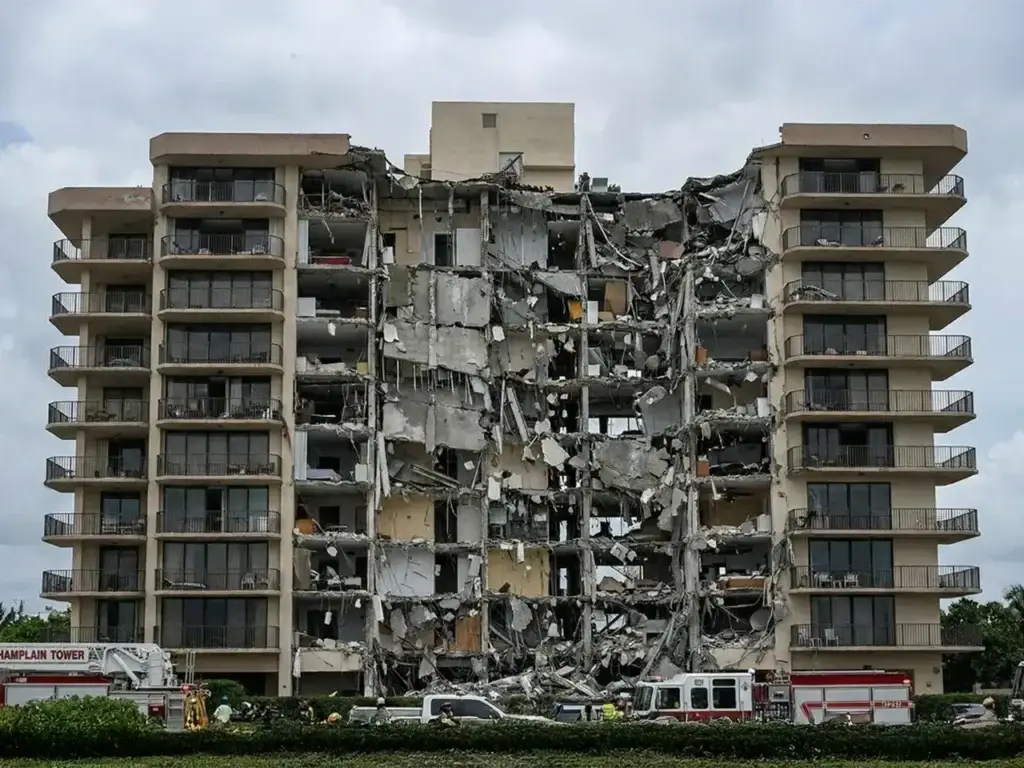
As CondoWonk previously discussed in The Real Lesson of Champlain Towers, the stock of condominium buildings is rapidly aging. These buildings are a critical part of California’s affordable housing supply. As we said then, boards need help, not punitive measures, to evaluate their buildings’ condition and raise the money to take care of them now, before they need even more costly repairs.
This simple legislative change can immediately remove one major obstacle to maintaining older buildings.
Please share this idea. Write to your state legislators and to organizations that are concerned with affordable housing issues. Send them a link to this article. And have them contact CondoWonk with their support.
Note: The survey of state law was performed by Westlaw AI Deep Research, an AI-based tool for legal professionals, followed by human review and analysis of particular state laws.